.png)
Your union at Cook County Health
Fighting for housestaff and patients since 1974
Interns, residents, and fellows have always played an essential role at Cook County Hospital, now John H. Stroger, Jr. Hospital of Cook County. Housestaff provide frontline care, carry major responsibility for patient care, and see firsthand how hospital policies affect both workers and patients.
The House Staff Association was formed because residents and fellows understood that improving working conditions, protecting medical education, and improving patient care are deeply connected.


One of the first housestaff unions in the country
The 1975 doctors’ strike
In the early 1970s, residents at Cook County Hospital became one of the first housestaff groups in the country to unionize. HSA grew out of decades of efforts by housestaff to improve the quality of patient care, strengthen residency training, and give frontline physicians a real voice in hospital decision-making.
In 1975, HSA went on strike to demand the staff, equipment, and resources necessary to provide quality medical care to County Hospital patients.
After an 18-day strike --one of the longest doctors’ strikes in U.S. history -- HSA won the right to have a meaningful voice in patient care decisions and quality standards. The contract included patient care improvements and created the Medical Care Review Committee to address future patient care problems.

Defending Cook County Hospital
During the financial crises of the late 1970s and beyond, Cook County Hospital faced funding cuts, staff reductions, delayed building improvements, and threats to essential services.
HSA joined with other unions, community groups, patients, and advocates to defend Cook County Hospital and the communities it serves. HSA has long understood that protecting public health care means organizing alongside the patients and communities who rely on it.
A voice in hospital change
In 1993, HSA members voted to affiliate with the National Union of Hospital and Health Care Employees, NUHHCE, the health care division of AFSCME.
This affiliation strengthened HSA’s ability to organize, bargain, conduct research, enforce the contract, and advocate around patient care, public health, and the future of graduate medical education.
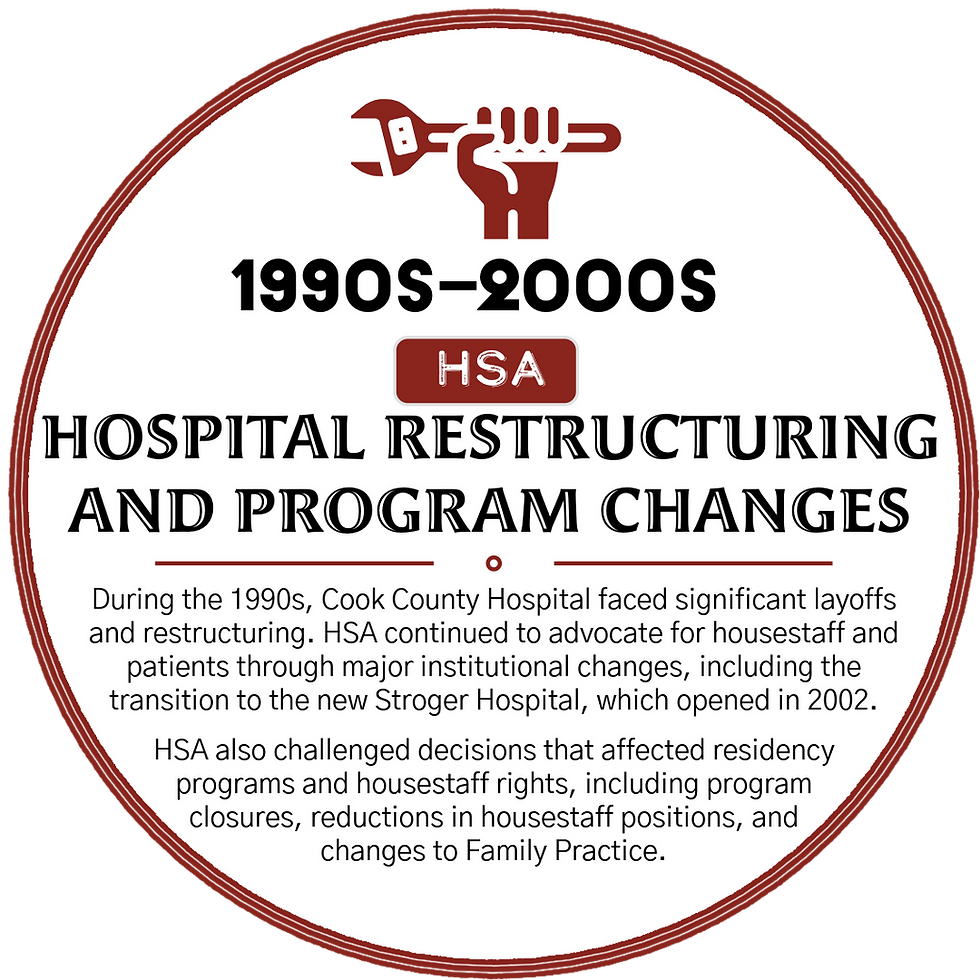
HSA has continued to advocate through periods of hospital restructuring, staffing changes, program changes, and major institutional transition. When the new Stroger Hospital opened in 2002, and as Cook County Health expanded ambulatory and community-based care, HSA continued to push for housestaff and patient voices to be included in decisions that affect care.
HSA has also fought to protect residency programs, including challenging decisions that affected Family Medicine. In 2017, Family and Community Medicine reopened, and those residents have remained an important part of HSA and the broader Cook County housestaff community.

HSA during COVID-19
HSA today
During the COVID-19 pandemic, HSA advocated for the safety of housestaff and patients, including access to proper PPE, safer staffing, and compensation for the extraordinary workload placed on residents and fellows. The pandemic made clear what HSA has always known: housestaff working conditions are patient care conditions.
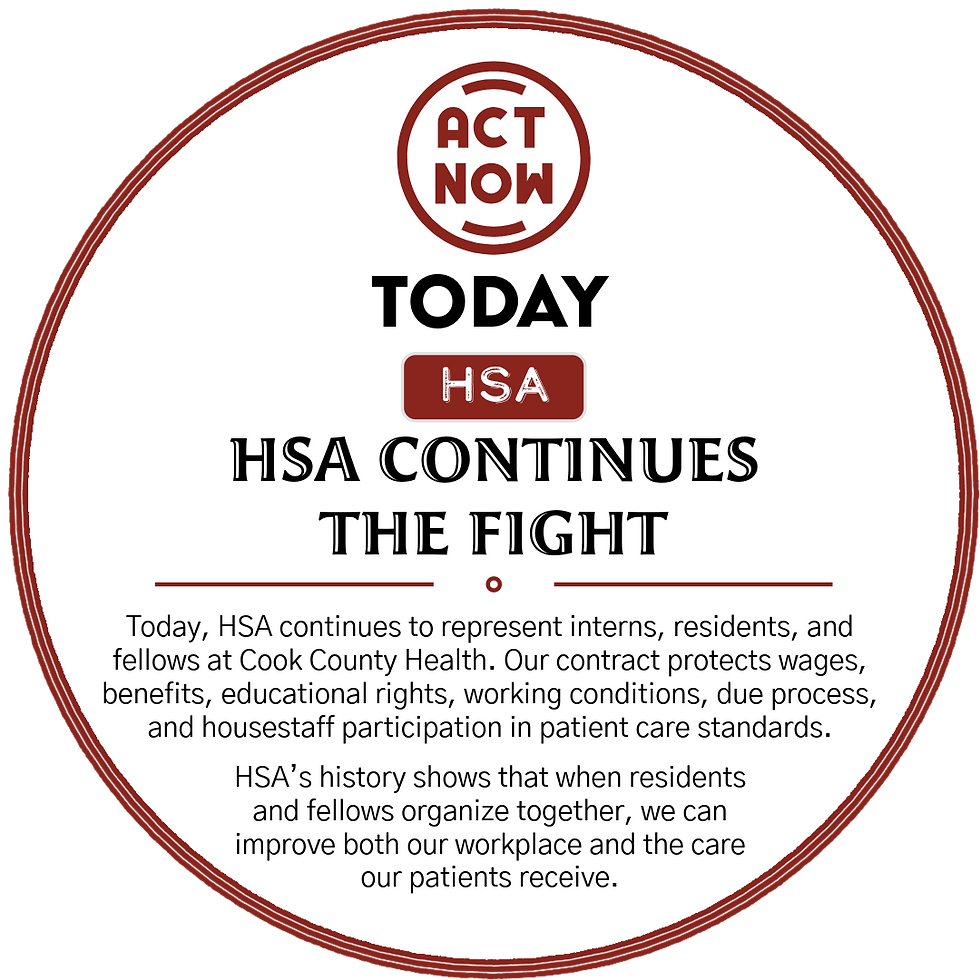
Today, HSA continues to represent interns, residents, and fellows at Cook County Health. Our contract protects wages, benefits, educational rights, working conditions, due process, and housestaff participation in patient care standards.
HSA’s history is rooted in the belief that residents and fellows deserve a voice, and that when housestaff organize together, we can improve both our workplace and the care our patients receive.

Labor Stories: HSA Strike 1975
Hear from
the original house staff association organizers and community as they build their union and fight for better patient care and worker safety.

Our
Union Family


HSA’s history is local, but it is not isolated.
Our union was built by Cook County residents and fellows who understood that working conditions, medical education, and patient care are deeply connected. That same belief runs through the history of NUHHCE, AFSCME, and the AFL-CIO: workers deserve a voice, and public institutions are stronger when the people doing the work can speak up collectively.
For HSA members, this history is not just symbolic. It gives us a connection to generations of workers who organized for safer workplaces, fair wages, collective bargaining rights, civil rights, better public services, and stronger health care institutions.
When residents and fellows organize through HSA, we are carrying that history forward — as health care workers, as public service workers, and as part of the labor movement.
HSA’s history at Cook County is part of a much larger labor history.
HSA is affiliated with NUHHCE, the National Union of Hospital and Health Care Employees, AFSCME, AFL-CIO. Through that affiliation, HSA is connected to generations of health care workers, public service workers, and union members across the country who have organized for dignity, safety, fair pay, civil rights, and a real voice at work.
Rooted in Health Care Worker Organizing
NUHHCE’s history began with health care workers organizing for respect, fair treatment, and better conditions in hospitals and health care institutions. Its roots trace back to Local 1199, a union known for organizing hospital and health care workers and for connecting workplace struggles to broader fights for civil rights and social justice.
For HSA, that history matters. Residents and fellows are physicians in training, but we are also health care workers. Our working conditions affect our education, our well-being, and the care our patients receive. HSA’s affiliation with NUHHCE connects Cook County housestaff to a broader tradition of health care workers organizing to improve both their workplaces and their institutions.
Part of the Public Service Labor Movement
NUHHCE is affiliated with AFSCME, the American Federation of State, County and Municipal Employees. AFSCME represents public service workers across the country — workers who keep hospitals, schools, cities, counties, public agencies, and essential services running.
AFSCME’s history includes major struggles for collective bargaining, public sector union rights, safe working conditions, and dignity on the job, including the 1968 Memphis sanitation workers’ strike. That history reflects a core belief that public workers deserve respect, protection, and a voice in the services they provide.
HSA shares that public service mission. Cook County Health is a public health system, and HSA members care for patients who rely on that system. Our fight for fair schedules, safe staffing, strong training, and due process is also a fight for a stronger public hospital.
Connected to the Broader Labor Movement
AFSCME is part of the AFL-CIO, the national federation of unions representing workers across many industries. The AFL-CIO connects unions in health care, education, public service, transportation, construction, communications, manufacturing, and more.
Through the AFL-CIO, HSA is connected to the broader labor movement’s long fight for workplace rights, fair wages, health and safety protections, anti-discrimination protections, family leave, collective bargaining, and democracy at work.
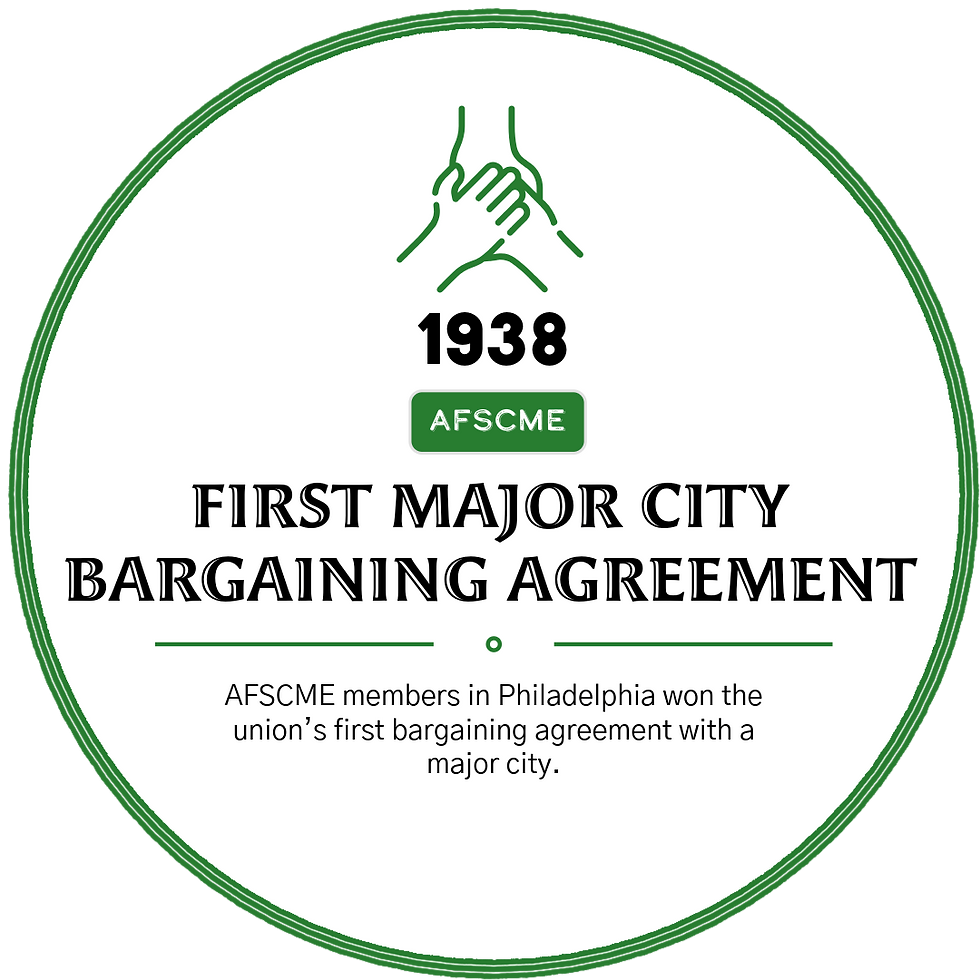
Use the timeline below to see how HSA’s work fits into the history of NUHHCE, AFSCME, and the AFL-CIO.